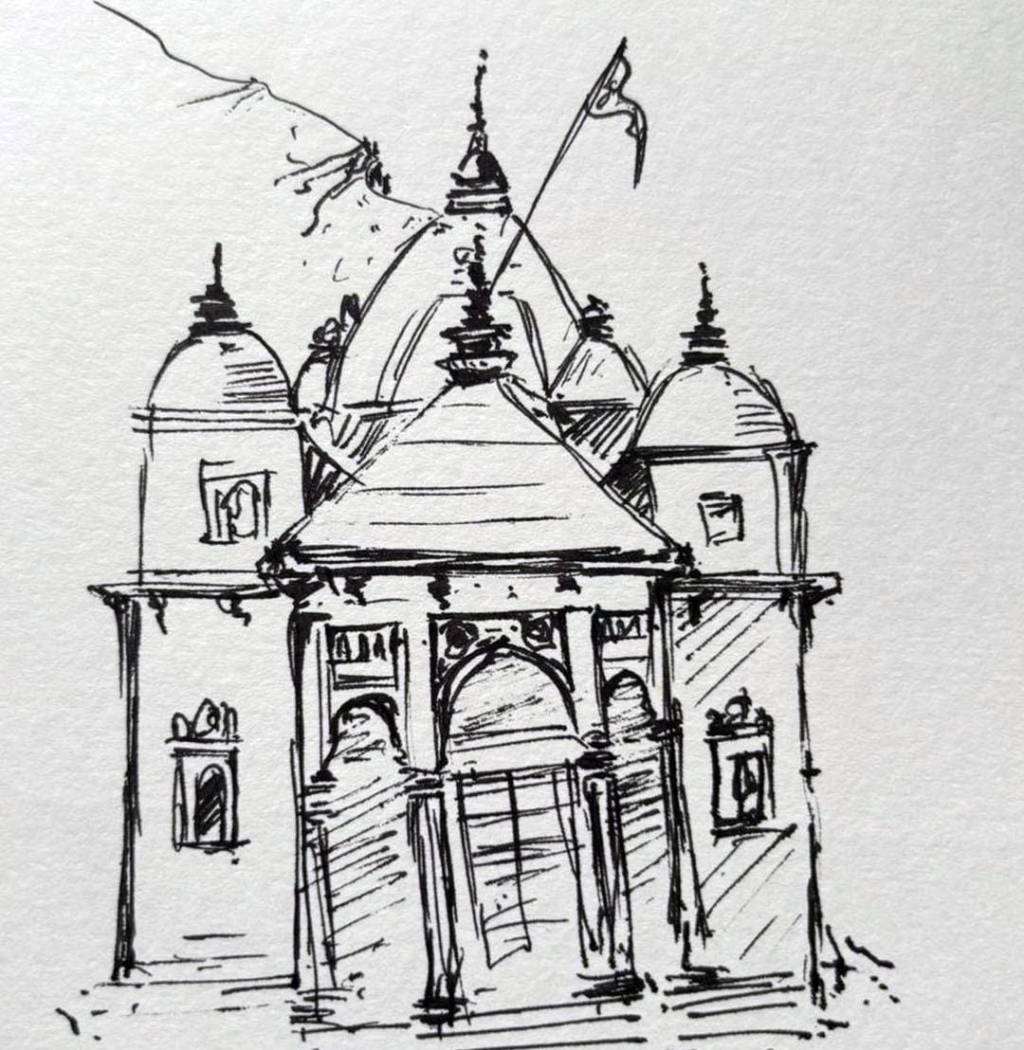
Aghast, disgust and shame.
These are the emotions I felt during my recent visit to a Devi temple near Nashik.
The temple, beautifully nestled in the hills of the Sahyadris, had filled me with excitement as I drove through mist-covered valleys. The weather was perfect, drizzles, grey skies, and a cool, pleasant breeze. However, all that anticipation faded the moment I arrived at the temple premises.

My driver parked the car and gestured for me to proceed toward the temple. I looked around and noticed a building with a ticket counter and a glass entrance. Puzzled, I asked him again, “Is this the temple?”
He seemed more disturbed by my question than I was. His expression said it all—why was I doubting? Why wasn’t I moving ahead, especially now that the cars behind us had started honking?
Sensing the impatience, I quickly stepped out, much to my driver’s relief and walked straight toward the ticket counter of what looked more like a railway station or a bus terminal than a sacred place. The building looked new, but had a bare, boxy, outdated and unimaginative design. Maybe the heritage dome of the temple lay hidden behind the mist.
A Cultural & Spiritual Blasphemy
The first step to Devi’s darshan should have filled me with a sense of calm—a quiet moment to reflect, to surrender, or to simply take in the beauty of the place. But instead, it felt more like we were lining up for a bus ride. Buying a ticket at a counter, and preparing to board a funicular ropeway—it all felt oddly transactional, almost mundane, far removed from the sanctity one expects when approaching the divine.
But just as I was about to enter through the glass door, I stumbled and paused.
To my left was a closed mini amusement area for children, where a few colourful rides stood still and lifeless. The sight only deepened my suspicion: was I really on my way to a temple? As I stepped through the glass door, I found myself in a corridor lined with shops—selling handbags, purses, idols, bangles, and glittery necklaces. As I walked further, a sprawling food court came into view. Bright electric signage flashed menus—misal, Chinese, bhakhri, dosa, coffee…
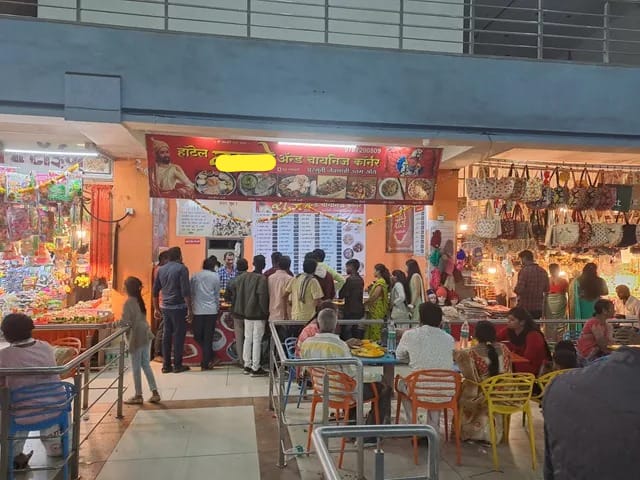
Washroom signs display more prominently than even the deity’s name. Convenient, of course, but jarring when placed right at the heart of what was supposed to be a sacred journey. I was almost certain I had mistakenly entered a shopping mall. Everything about the space—the glass doors, the food counters, the buzzing crowd—felt too far removed from the idea of a sacred pilgrimage. I even began looking for an exit.
But just then, I noticed a cluster of shops selling flowers, garlands, coconuts, and offerings for the Goddess. I paused.
Perhaps this was the right place after all.
Maybe this bustling commercial zone was an inevitable part of every temple’s premises. Some temples have this marketplace just outside their gates; here, it seemed to be built right into the temple itself. Maybe, I thought, it’s even a ritual—scripted in some Shastra I haven’t read. A design I don’t understand, but am now reluctantly part of.
Spirituality, they say, isn’t about renouncing materialism—it’s about channelling it purposefully toward something higher. In modern India, however, temples seem to be channelling spirituality toward something higher- higher profits.
The ropeway took me to a higher level, where I hoped the mood would shift. But what awaited me was a repetition of the base: more shops, more snacks, more garlands—and a backdrop of stained walls, dirty dustbins, and rusty water coolers. The sacred space felt neglected, reduced to a holding area for what I couldn’t fathom.
By the time one reaches the crowded sanctum, enough unpleasantness has already greeted the senses. But still, I held on to hope—the sanctum, after all, is supposed to be the epicentre of energy, of positivity. Instead, it was stinking.
In one corner, behind the sluggish queue, sat piles of gunny bags—some torn, some damp—over which large geese scurried about, flapping and unsettled. The narrow lane I was pushed into, thanks to the relentless crowd from behind, had a stray dog weaving through it. Wet from the rain, it carried a strong smell and brushed its soaked body against unsuspecting devotees. The poor thing, I thought, was probably trying to shield itself from a stampede it instinctively feared.
I stayed alert, careful not to step into a puddle of dirty water that had formed just behind me. An unpleasant smell lingered in the air while I stood in a stagnant queue that hadn’t moved an inch since the aarti began. I couldn’t even bend to pick up the plastic wrapper fluttering a few meters away from my feet—a task promptly carried out, to my reluctant relief and silent horror, by a monkey, who began licking it with great devotion. Yes—this was the sanctum, the sacred inner chamber where one is meant to feel divine presence!
While bobbing my head in all directions, trying to steal a glimpse past heads and hands, I finally caught sight of Devimaa. For a fleeting moment, all my complaints dissolved. Her presence pulled me in.
But as I moved closer, and her image came into fuller view, something unexpected happened. Instead of soothing me, she seemed to be rebuking me. It felt as if she was urging me to not let go of my angst, but to hold it steady, to let it burn with purpose.
Amidst the pushing, the shoving, the urgent commands to “move forward,” her message rang louder than the crowd: Remember the niyamas of Ashtanga Yoga, she seemed to say. The very first— Sauch—cleanliness. Without it, there is no meditation, no sanctity. Not of mind, not of space.
She reminded me, too, of a verse —Bhagavad Gita, Chapter 6, Shloka 11
शुचौ देशे प्रतिष्ठाप्य स्थिरमासनमात्मन: |
नात्युच्छ्रितं नातिनीचं चैलाजिनकुशोत्तरम्
where Krishna advises the yogi to find a clean, quiet place for meditation, untouched by filth, distraction, or excess. A sacred space should reflect the sanctity of the soul seeking refuge in it.
She was telling me—firmly, unmistakably—that a clean space is not a luxury, but a necessity for the consecration of the mind. Without it, stillness cannot settle, and devotion cannot deepen. A clean space is essential even for her presence.
She, the one who embodies beauty, design, and divine aesthetics—how could she truly dwell in a space so lacking in all three?
Immediately after the darshan, we went into contemplation. Contemplating buying souvenirs and sweets for our acquaintances. The shops, strategically placed and visually loud, demanded our attention, which comfortably drifted away from the deity we had just soaked in moments ago.
While the people accompanying me seemed pleased with the darshan, I couldn’t share their sense of contentment. She wouldn’t allow me to feel at ease, not with the space that had been created around her. It was as if she refused to let me rest in it, refused to let me forget.
Even when others settled down for refreshments, I remained standing. I couldn’t bring myself to sit on the chairs, coated in layers of dust, or at the tables placed right beside dustbins, overflowing not with the amount of trash, but with the improper dumping of the trash. The few tables away from the bins weren’t any better; they were littered with scraps of leftover food.
This is the story of many—no, mostly all—temples in modern India. I had always believed temples were meant to help us cleanse our desires, quiet our minds, and turn inward. But what I encountered was quite the opposite. These spaces seem designed not to dissolve desire, but to ignite more of it—through shops, distractions, and sensory overload. And for someone like me, they spark not longing, but discomfort. Disgust, even with the poor aesthetics, the disregard for cleanliness, and the spiritual hollowness behind all the spectacle.
I’ve seen enough temples where the sanctum, the supposed heart of divinity, is a picture of neglect. Puja accessories lie scattered and unkempt, plastic bags crumpled in corners. Dust-covered artificial flower garlands cling to walls, their dullness now part of the décor. Ceiling fans compete with the garlands in collecting layers of grime, while curtains hang limp, never washed, never changed.
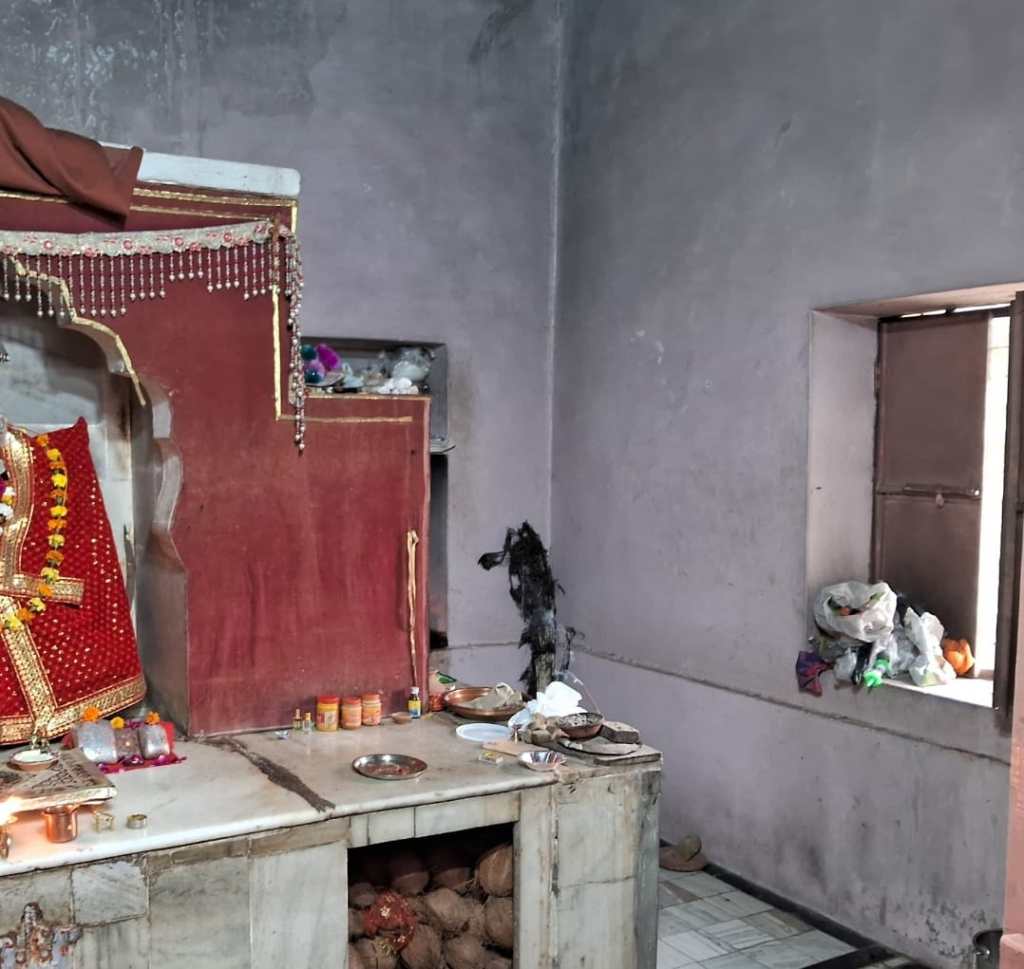
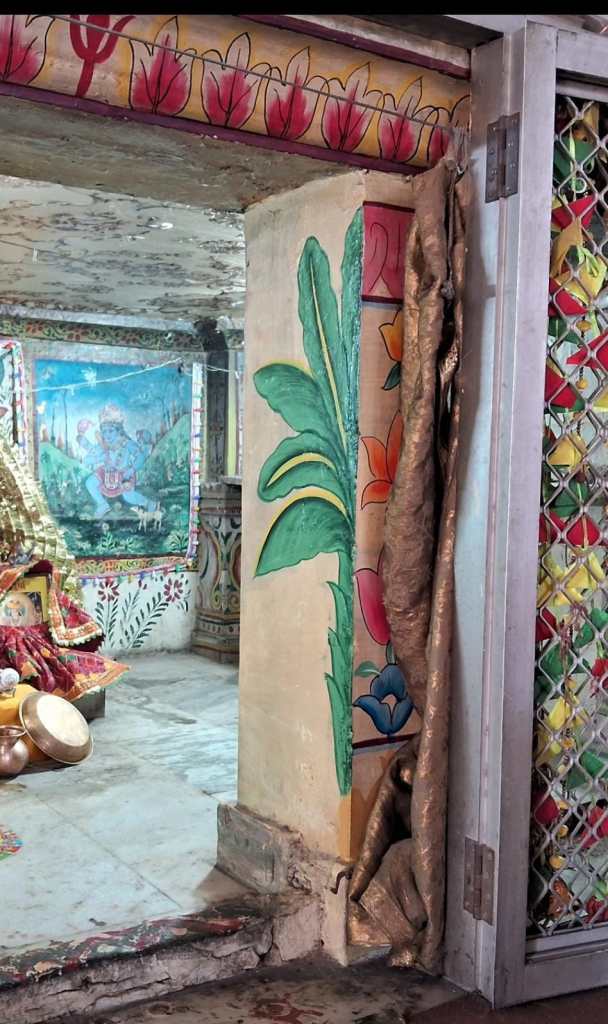
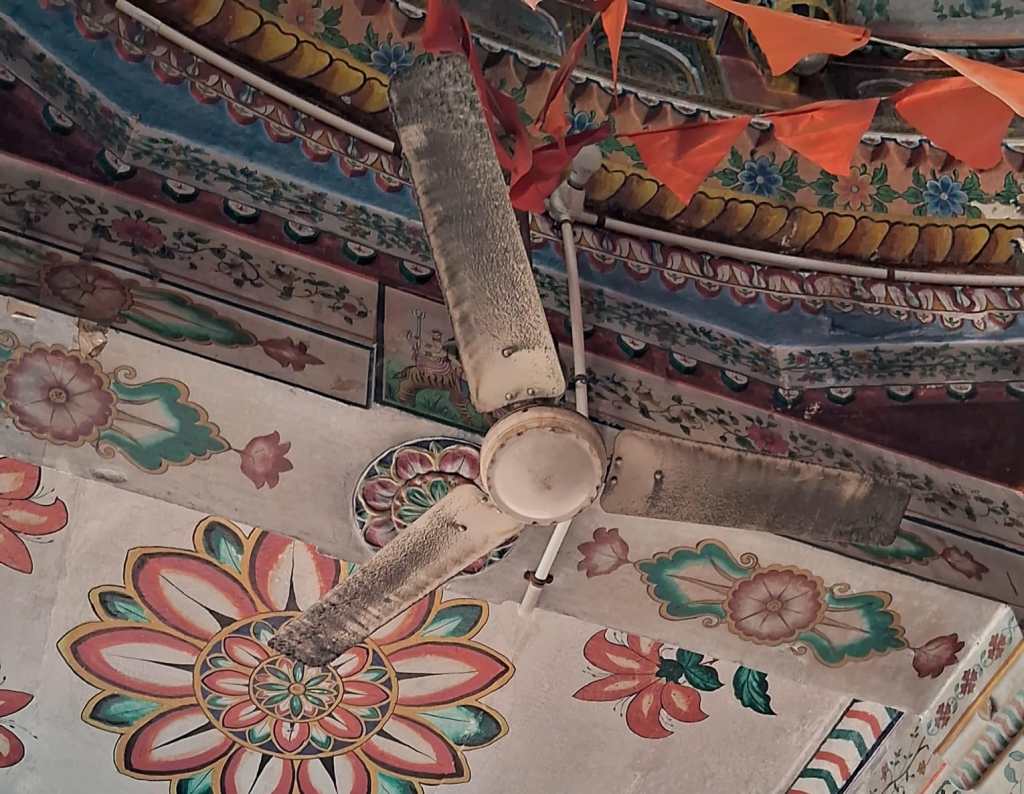

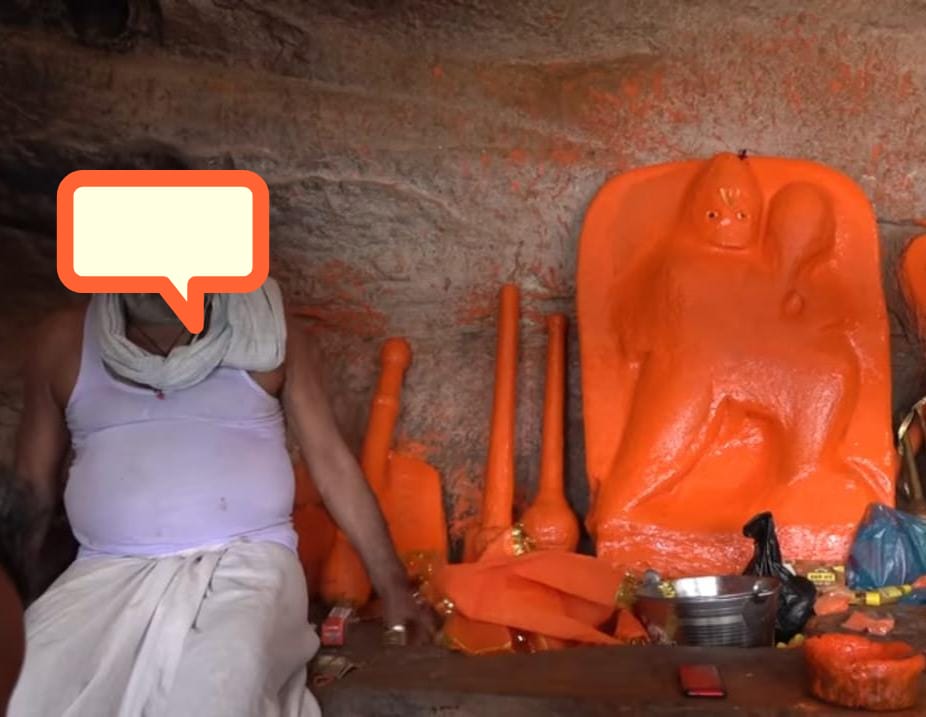
The backdrop behind the deity is often a faded cloth, stained, sagging, and untouched by care. And the priests, dressed in their once-white banyans now yellowed and soiled, wear them with a strange sense of pride, as if the sacredness of ritual absolves the absence of cleanliness.

Significance of Temple Space Design
Except for a few timeless marvels, heritage temples like the Konark Sun Temple, Mahabalipuram, Hampi’s Virupaksha, and others of their kind, the space design of most temples in modern India fails to reflect the spiritual intensity they are meant to hold.
Whether one is a believer in temples or not, the psychology of human behaviour consistently affirms this: the built environment profoundly shapes our emotions and thoughts. Any space we enter—sacred or secular—communicates silently through its form, material, order, light, and care. It has the power to elevate or diminish, to welcome or alienate.

A thoughtfully designed built environment should evoke a sense of belonging, a feeling that you are meant to be there. It should inspire calmness, reverence, or reflection, depending on its purpose. In spiritual spaces, it must cultivate an atmosphere that gently invites one to turn inward. Elements like cleanliness, natural materials, symmetry, light, colour harmony, and sound all influence whether a space becomes nourishing or numbing.
A temple, in particular, should not only house the divine but reflect it through its aesthetic coherence, attention to detail, and spatial grace. It should provide a calmness that helps the mind settle, the heart open, and the spirit rise. Even for those not inclined toward ritual or belief, a well-designed temple can still evoke a quiet awe, a cultural respect, or simply a moment of peace.

When architecture loses this intention and becomes a clutter of commerce, negligence, and noise, it doesn’t just repel—it erodes the very purpose of the space. And when that happens, we don’t just lose design—we lose connection, memory, and meaning.
A Cultural Emergency
It is a cultural exigency for a spiritually-rooted land like India to preserve its sacred identity with poise, pride, and the power of its unique aesthetic sensibilities. If we fail to uphold this, our own younger generations may drift further away from these spaces. Millennials and Gen Z might continue to visit temples out of parental obligation or a sense of moral duty, but without genuine connection, without inner resonance. Without beauty, cleanliness, and spiritual coherence, the soul of the temple may remain unreachable to the very minds it hopes to awaken.
Way Forward
A public-private partnership model can be encouraged to support the development and revitalisation of temples. However, a key concern with private entities leading such efforts is their lack of emotional and cultural connection to the sacred spaces they are shaping. Without a genuine sense of belonging, these developments often drift toward impersonal design.
Modern architects, influenced heavily by international trends and standardised design principles, frequently overlook the subtle nuances of local culture, values, and aesthetics. As a result, temples are either excessively modernised—stripping them of their spiritual depth—or are adorned with generic cultural motifs that lack specificity and soul, repeating the same patterns seen across many temples.
To counter this, the development of temple spaces must be entrusted to a multi-disciplinary team—one that includes architects, artists, art historians, cultural scholars, and most importantly, members of the local community. This collective approach ensures that design is not only structurally sound but spiritually resonant, culturally rooted, and emotionally meaningful.
Redesigning Temple Space
The space within the temple deserves a design that respects the devotee’s experience. In most temples today, darshan lasts only a few fleeting seconds. The main sanctum is often overcrowded, overflowing with people who surge forward like waves, leaving little time, space, or stillness to truly feel the energy of the place.
The sanctum should be reimagined to accommodate larger groups of people seated, not rushed, allowing them to sit in batches, observe, reflect, and quietly connect with the deity. Darshan should be more than a glimpse; it should be a moment of presence.
Additionally, temples should include a dedicated meditation hall—a calm, acoustically and energetically balanced space where individuals can meditate, internalise the deity’s presence, and experience spiritual stillness without interruption.
Temples should also include a dedicated space for cultural and historical education, where visitors can learn about the temple’s origin, significance, and the larger context it belongs to. This can take the form of a museum, an interactive gallery equipped with AR/VR experiences, or an interpretive centre that brings the past to life.
Such a space should house a library or knowledge hub, containing books and archival material on the region’s geography, its history, past rulers, the mythology and evolution of the presiding deity, as well as oral histories, stories of the local communities, and insights into the surrounding villages. These layers of information can transform a visit from a passive ritual into a deeply enriching cultural and spiritual journey.
Restoring Temple’s Dignity
There must be a proper dress code for temple priests. Wearing worn-out, homely banyans while performing sacred rituals diminishes the sanctity of the space. The attire should be respectful, clean, and aligned with the climate and ritual customs of the region, striking a balance between tradition and dignity.
In addition, an aesthetic oversight team should be appointed to maintain the sanctum (garbhagriha) with utmost care. The sacred core of the temple must be free of clutter and negligence. Puja paraphernalia should be organised, not scattered; personal belongings of priests must not be visible. If there is a backdrop behind the deity, it should consist of freshly laundered cloth. Smaller idols placed near the main deity should be clean and respectfully arranged. Artificial garlands that have gathered dust or faded with time must be removed. No tattered or discoloured elements should compromise the visual and spiritual integrity of the space.
Finally, a dedicated housekeeping team must be responsible for maintaining hygiene across the premises. This includes regular trash collection, preventing littering, and ensuring that every element—fans, curtains, doors, chairs, floors—is consistently neat, clean, and well-maintained. Cleanliness, after all, is the foundation of sanctity.
Temple’s Responsibilities
Temples should not only serve as centres of spiritual elevation but also take shared responsibility in uplifting the local economy. With thoughtful planning, the economic ecosystem surrounding a temple can flourish through local shops, eateries, artisan markets, and even amusement spaces, without compromising the sanctity of the temple itself.
These commercial and recreational zones can be developed away from the temple, not within the sacred premises. Distancing them from the spiritual core ensures that the temple remains a space for reflection and reverence, while the surrounding area supports livelihood, tourism, and regional development in a way that is both respectful and sustainable.
The primary duty of a temple is to offer a sattvik environment—pure, uplifting, and harmonious—for the countless devotees who travel from far and wide seeking spiritual solace. When a temple fails in this essential role, it falters not just as a religious institution but also as a cultural symbol and a spiritual torchbearer of the civilisation it represents.
Sadly, many temples today are losing that essence. Overcrowded, unclean, and overwhelmed by commerce, they leave the soul untouched and the senses fatigued. It is no surprise, then, that medical tourism is rapidly outpacing cultural tourism. The spaces once meant for inner renewal now struggle even to maintain outer order.
A Note on Anonymity
I have purposefully refrained from naming the temple I visited. Keeping it anonymous allows this reflection to speak more universally, for this is not an isolated incident, but a shared condition that spans across many sacred spaces in modern India.




Leave a comment