
While many of us tourists don’t want to miss the inescapable Maggi in the mountains, I often wonder how and why this processed food became a staple in regions abundant with natural produce—lentils, fruits, nuts, spices, and grains. Is it simply the appeal of its instant-cooking tag, or is it also a reflection of our collective laziness, or perhaps the locals’ indolence to showcase their rich culinary heritage to the world?
Isn’t it unfortunate that our mountains have yet to popularise their indigenous food, instead succumbing to the branding tactics of instant noodles—products better suited to war zones or emergency shelves than the fertile, produce-rich mountains of an agrarian nation?
What stops us from innovating exotic dishes using aadu, buransh, kafal, walnuts, plums, and apples? Why haven’t we crafted indigenous soups from the unique lentils and dals found in the mountains? Imagine a clear rajma broth or a bhat ki dal and coriander soup—flavourful, nutritious, and deeply local. These lentils can be dry-roasted, powdered, and turned into easy premixes—perfect for instant, healthy mountain soups.
Why not bring together locals, tribal communities, food bloggers, pahadi chefs, and culinary connoisseurs to collaborate on creating simple, delicious, easy-to-cook recipes tailored for tourists?
If local flavours gain popularity, they could give a strong boost to mountain farming, bringing prosperity to the region and significantly reducing the packaging waste generated by mass-produced instant foods.
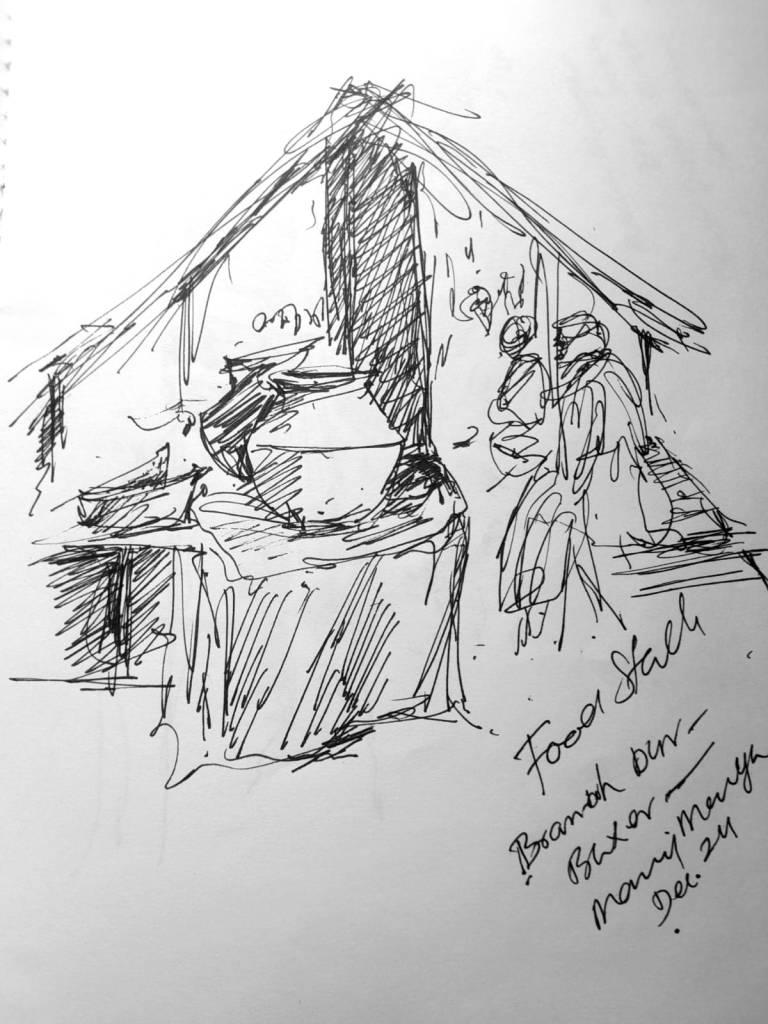
I wish to see a local food movement that instantly rids our beautiful mountains of Maggi and substitutes them with addictive local produce.
A small step in this direction was taken when I visited a small Himalayan village at an altitude of nearly 3,500 m. In the evening, we felt the craving for some hot soup. Who wouldn’t? In the chilly mountain evenings!
We asked the chef at the small restaurant attached to our cottage if he could make us some soup. To our dismay, he initially offered us a selection of instant, packaged soups from the market. Curious, we asked about his background. He was from Jauljibi, a village near Dharchula in Uttarakhand, and had been pushed into the kitchen from a young age, having no sisters to share the domestic workload.
We then inquired about the vegetables he had on hand. He listed lauki (bottle gourd), garlic, onions, potatoes, carrots, and tomatoes. We suggested he sauté lauki, garlic, carrots, and tomatoes, blend them into a purée, heat the mixture, and finish it with a garnish of fresh coriander.
The result: a rustic, velvety vegetable purée soup—light, aromatic, and naturally savoury. It took no more than 10–15 minutes to prepare, yet it was so deeply flavourful and satisfying that we couldn’t help but want to recreate it at home. In that simple bowl, his rootedness in local tradition and indigenous instinct shone through.
If we want something instant and yummy, our mountains and their people are full of ideas and intent. Let us trigger their latent imagination by demanding fresh, local, healthy food rather than instant noodles.
Yes, mountain terrain offers challenges in cooking fresh food due to logistics, climate and availability of produce. At such times, these instant noodles can come to the rescue, especially for vegetarian folks, where options are limited. Let Maggi and its likes be SOS food and not barge into our mainstay pahadi staple.
For all the Maggi fans out there—your taste buds will truly thank you if you introduce them to some of pahadi authentic flavours: bhatt ki dal, ragi rotis, bhang chutney, kheere ka raita, sarson or amaranth greens, and hearty lentil khichdi. This is my personal recommendation if you’re traveling through the Kumaon region of Uttarakhand. I know you’ll thank me later—so, welcome in advance!
Jai Jawan, Jai Kisan!




Leave a comment