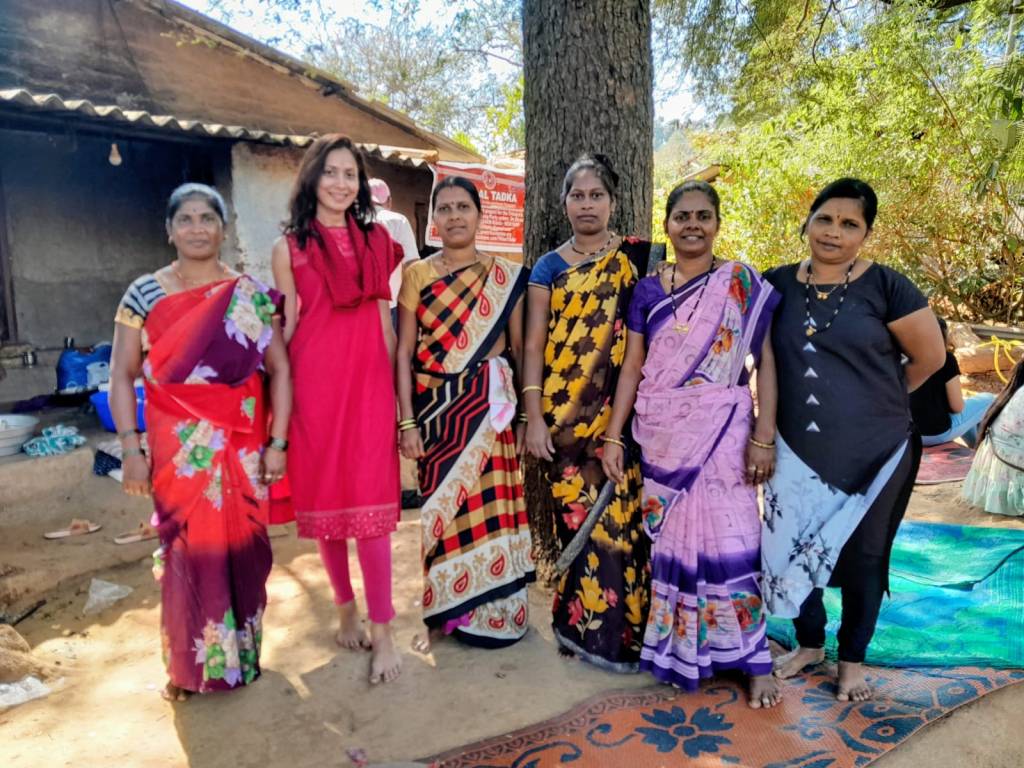
I was invited to a unique forest lunch with the Aarey forest indigenous tribal community which was organized by ‘Tribal Tadka’, a women’s empowerment programme run by Nazareth Foundation. The foundation organizes tribal walks where the participants get to know the tribal community’s lifestyle, houses, cooking, livestock, families, culture, art, aspirations, and beliefs. I joined the teachers and students from St Andrew College, Bandra who like me were curious to explore this small tribal village.
The village was clean with no garbage on the narrow mud lanes. The houses were modest with an essential Tulsi plant greeting you on the front of every veranda. Though surrounded by an abundance of wild foliage of the Aarey forest, the houses did tame few saplings like their urban brethren.
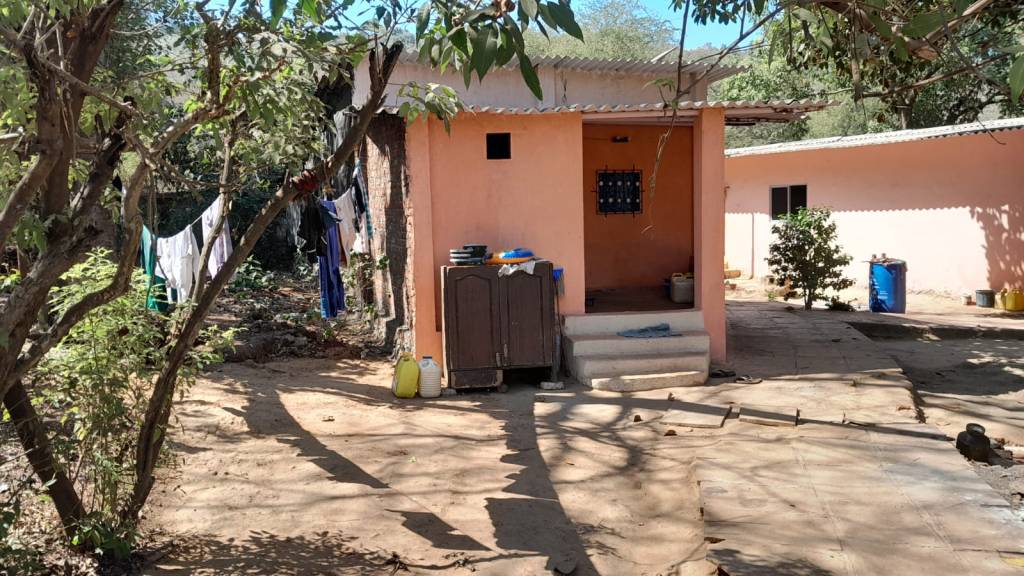
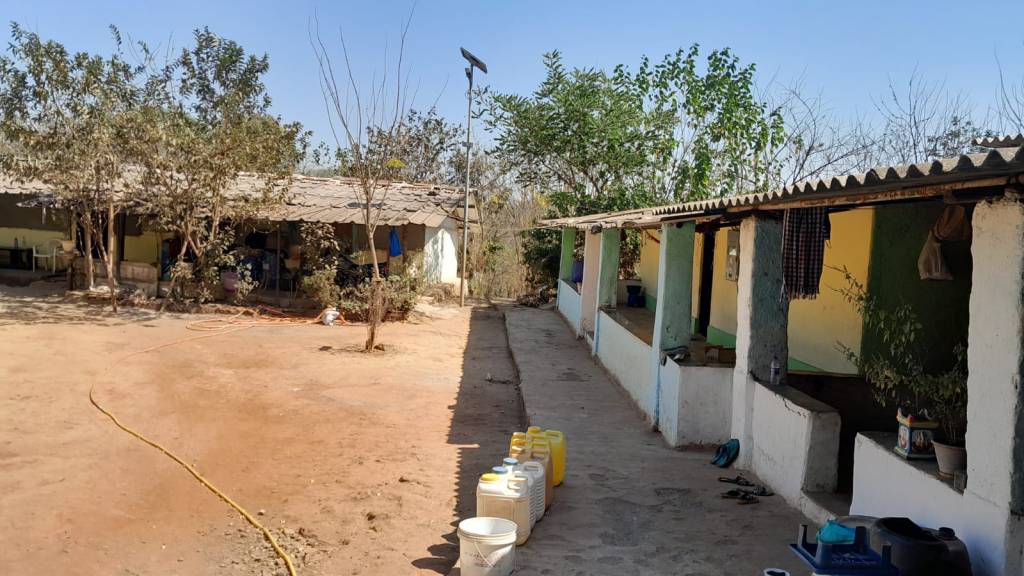

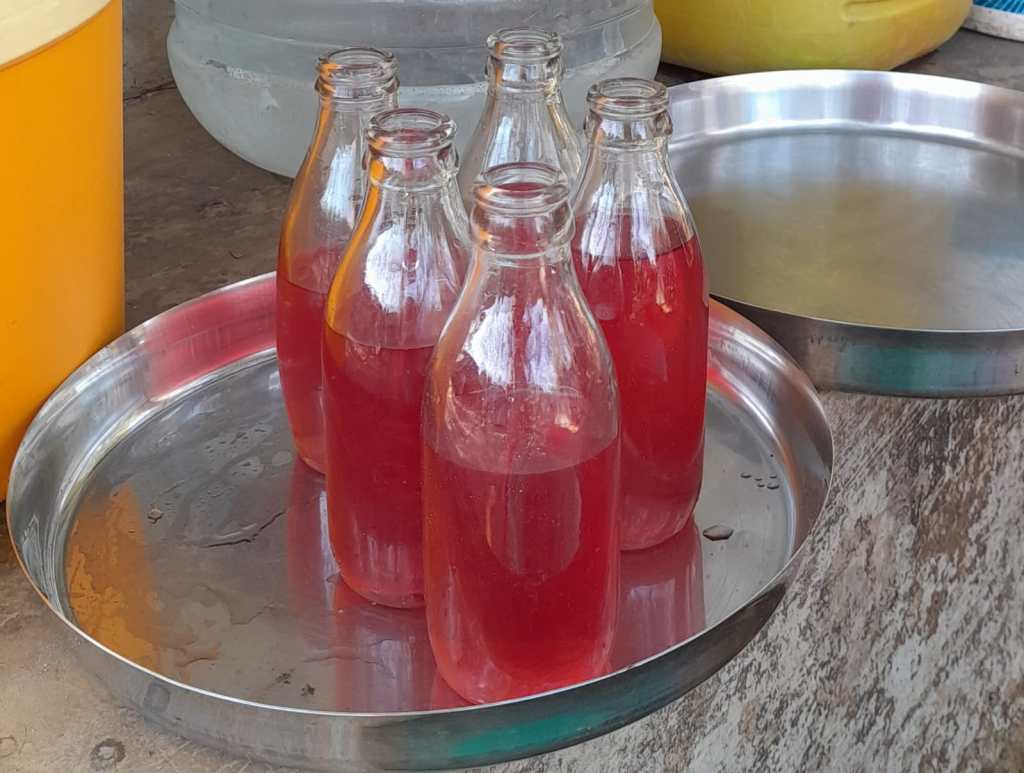
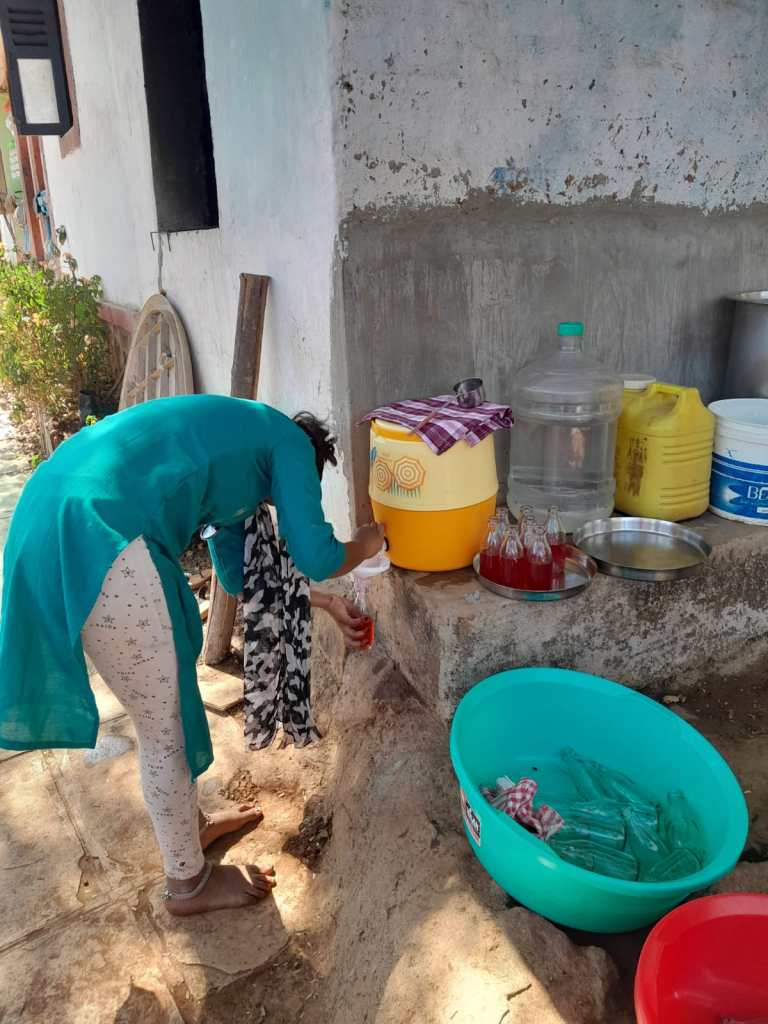
It was morning 11 am and Mumbai’s February temperatures were reminiscent of May summers. As soon as we reached the tribal houses, a soothing coolness welcomed us, which is far more calming and comforting than our energy-guzzling-green-gas-emitter air conditioners. The floor of the houses is made up of a mud mixture which keeps the temperature of the house cool in summer. The coolness quotient was amplified by a freshly brewed kokum sharbat (drink) served in a glass bottle. The drink satiated our thrust but the mildly sweet taste that it left on our palate gave us more cravings for it. Besides, the tribal women, cats, kittens, crows, and hens were our companions.
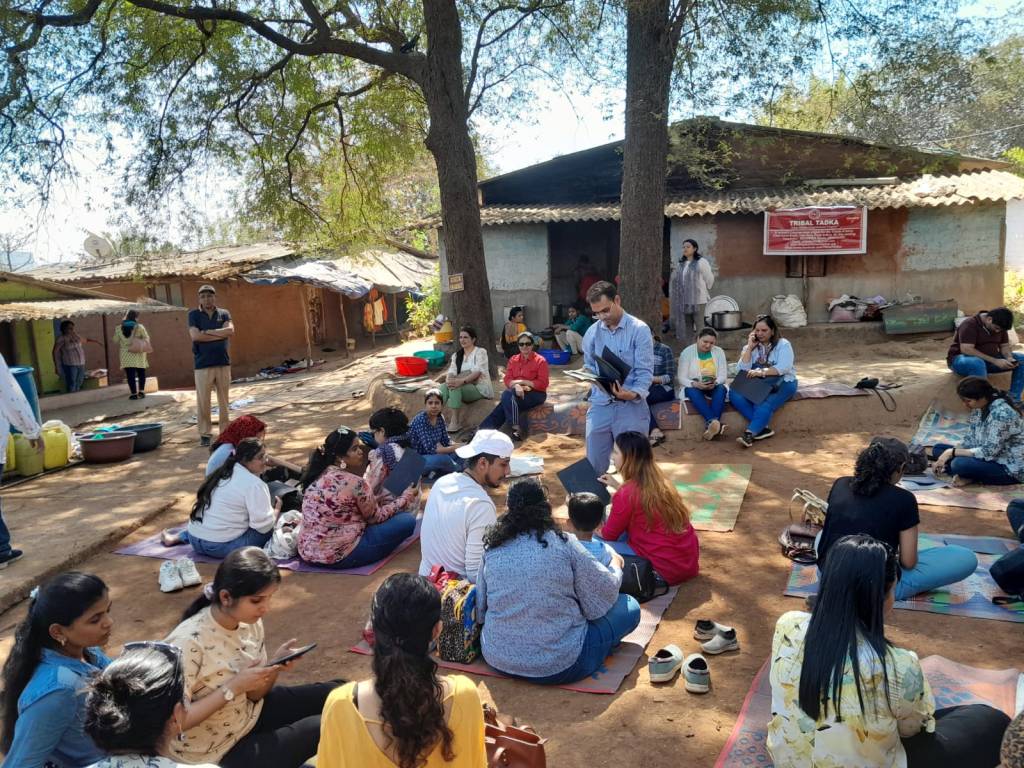
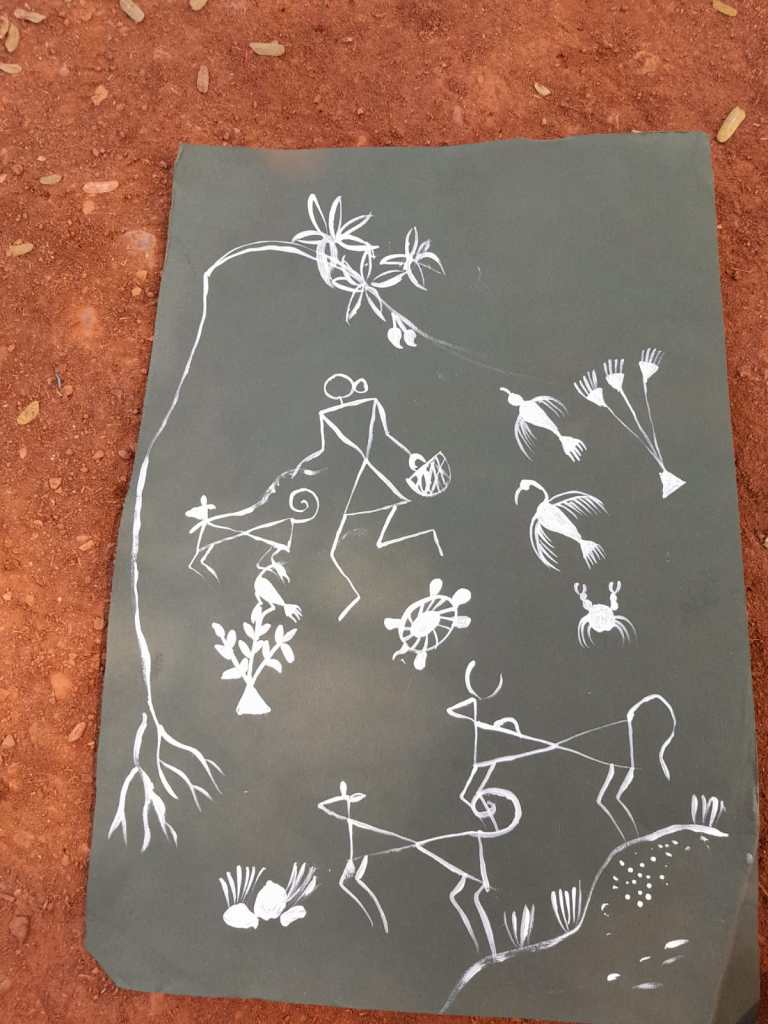
We were sitting comfortably under a huge ginger tree in the peak afternoon over the chatai mats (carpet) trying to acquaint ourselves with Warli art and implementing the same on paper. Mahesh Bariya, an artist and our instructor quickly plucked a few long leaves from surrounding trees and made their colour palettes. “Warli art is made with three elements- Triangles, Circles, and Lines”, Mahesh explains. “Triangles take inspiration from mountains, circles from the sun and moon, and Lines from trees. Thus, Warli art is exclusively inspired by the nature. With these three elements, one can create an entire universe. The tribal community makes elaborate Warli designs for festivals and special occasions like weddings, childbirth, etc. with these three elements.” Mahesh taught us to make human figures, animals, birds, water, flowers, and trees as beginners. I enjoyed creating human forms and animals with the technique taught by Mahesh.

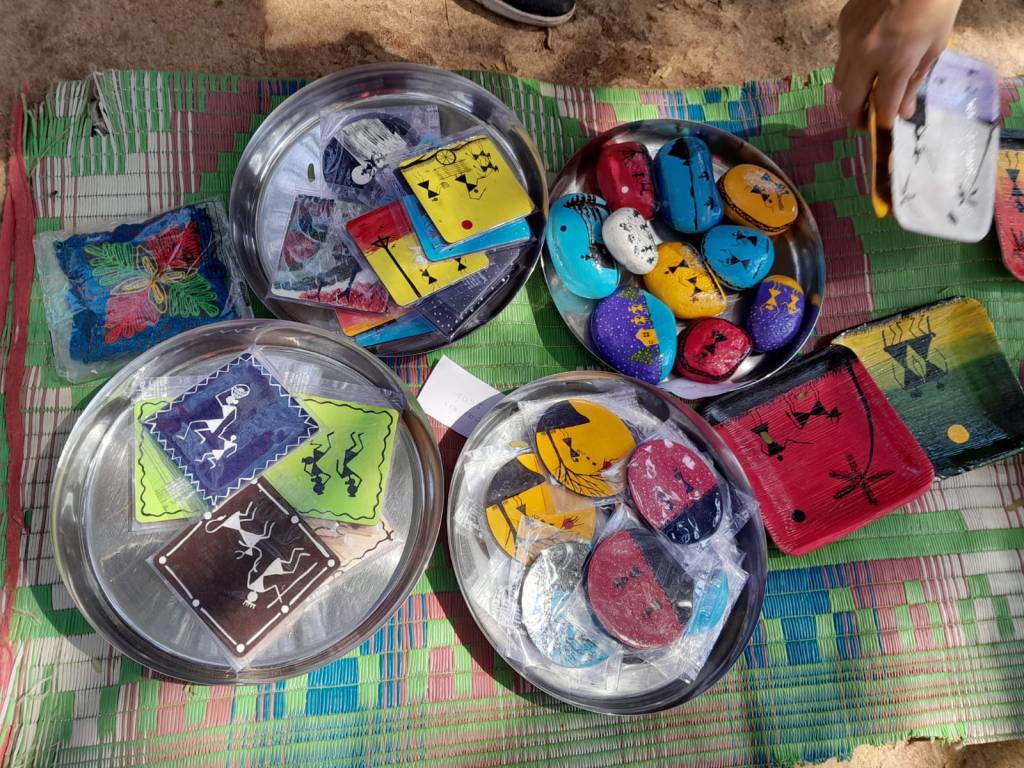
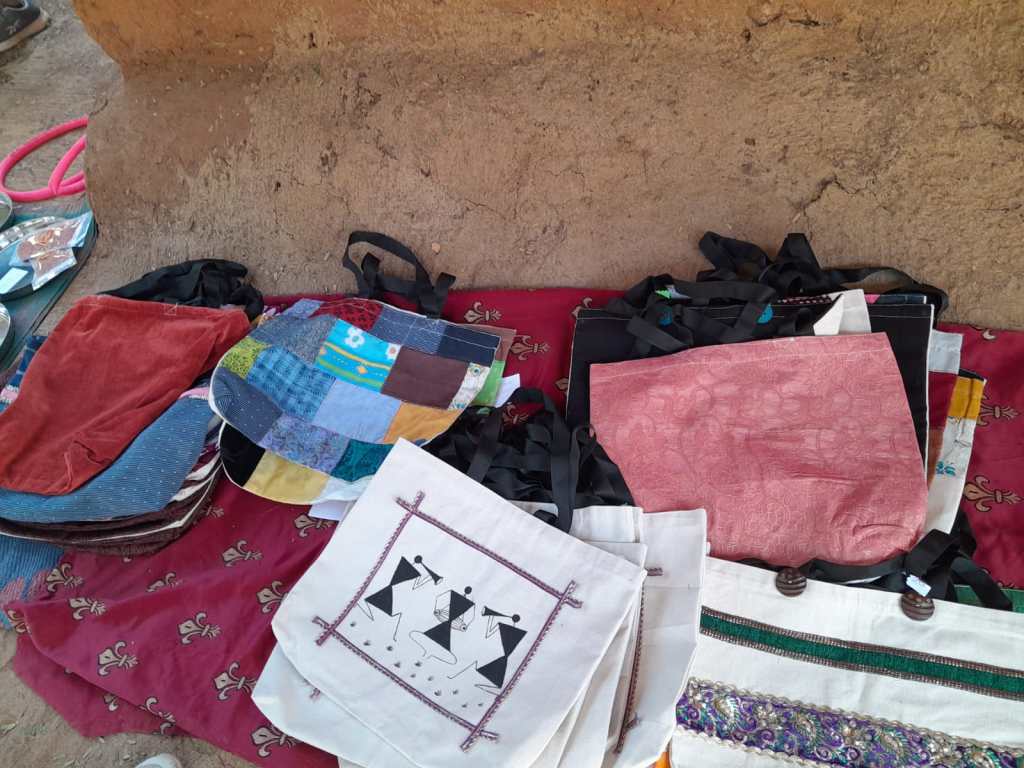
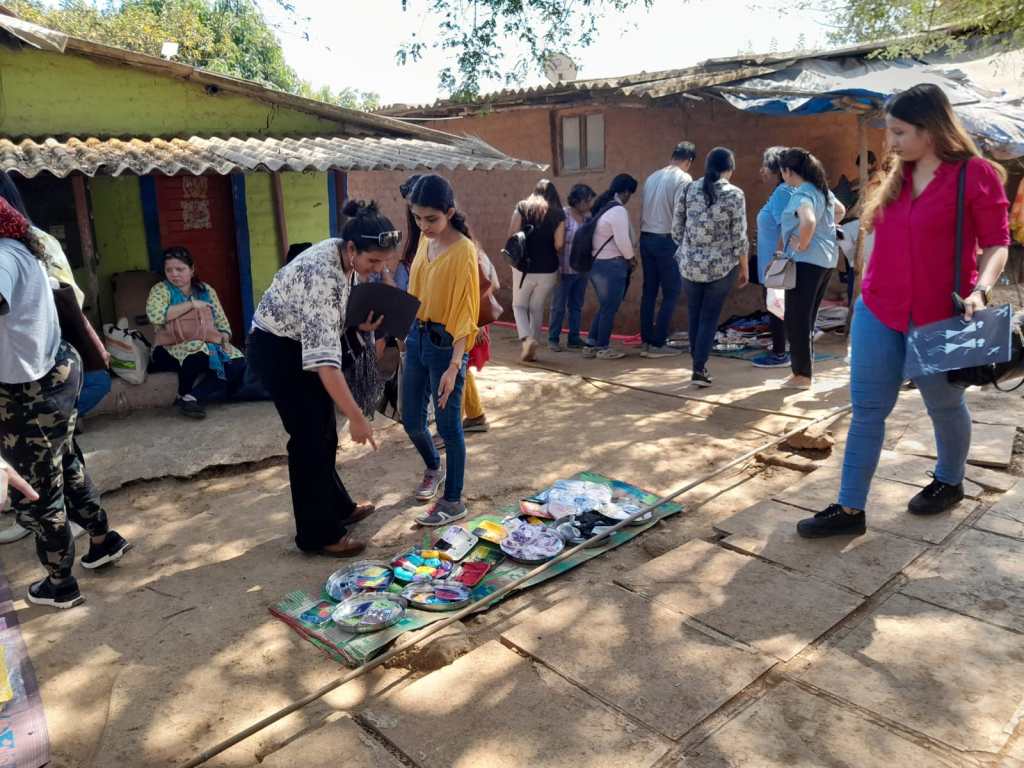
The women had put up a flea market which had hand-crafted articles like tea coasters, earrings, bags, dupattas, chutneys, dried curry leaves, lemon and orange dried peels, dried hibiscus leaves, and more. The dupattas and bags made from patches of clothes looked bohemian and uber.
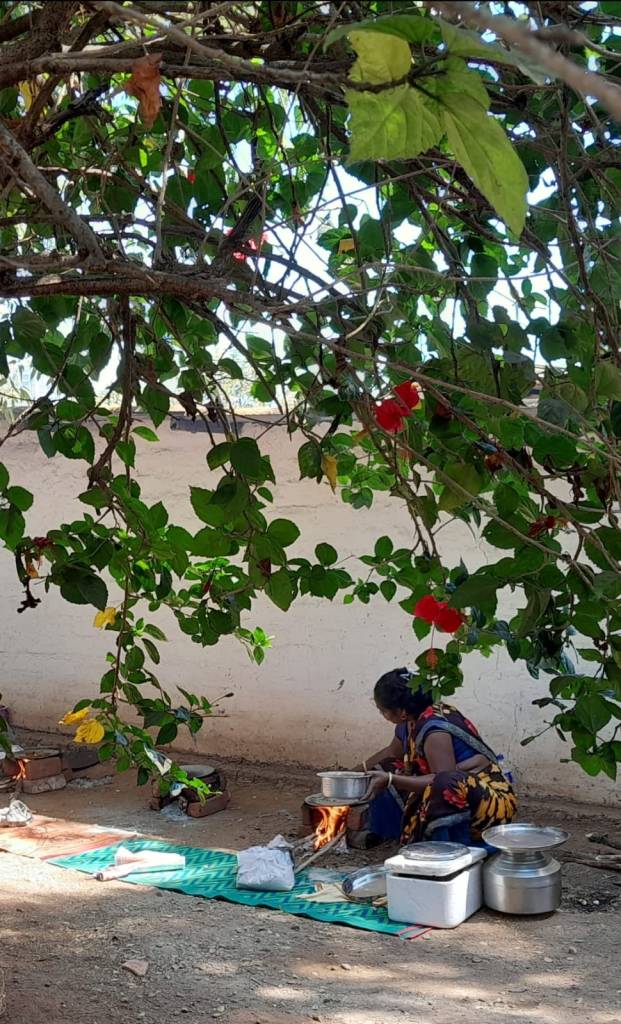
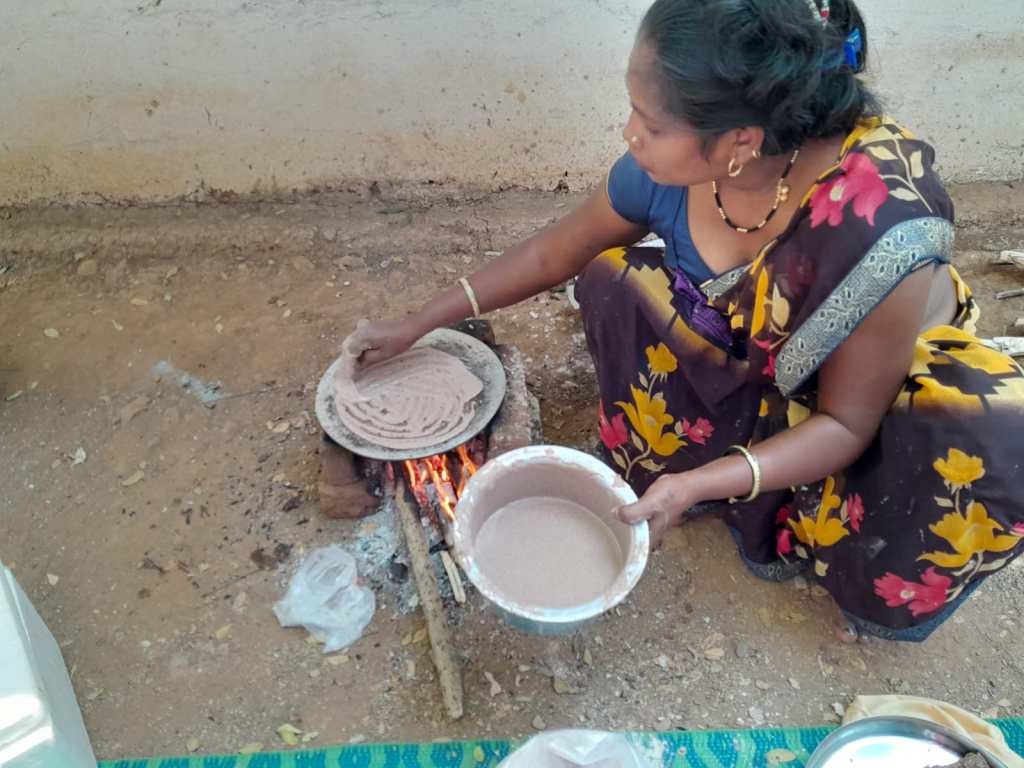
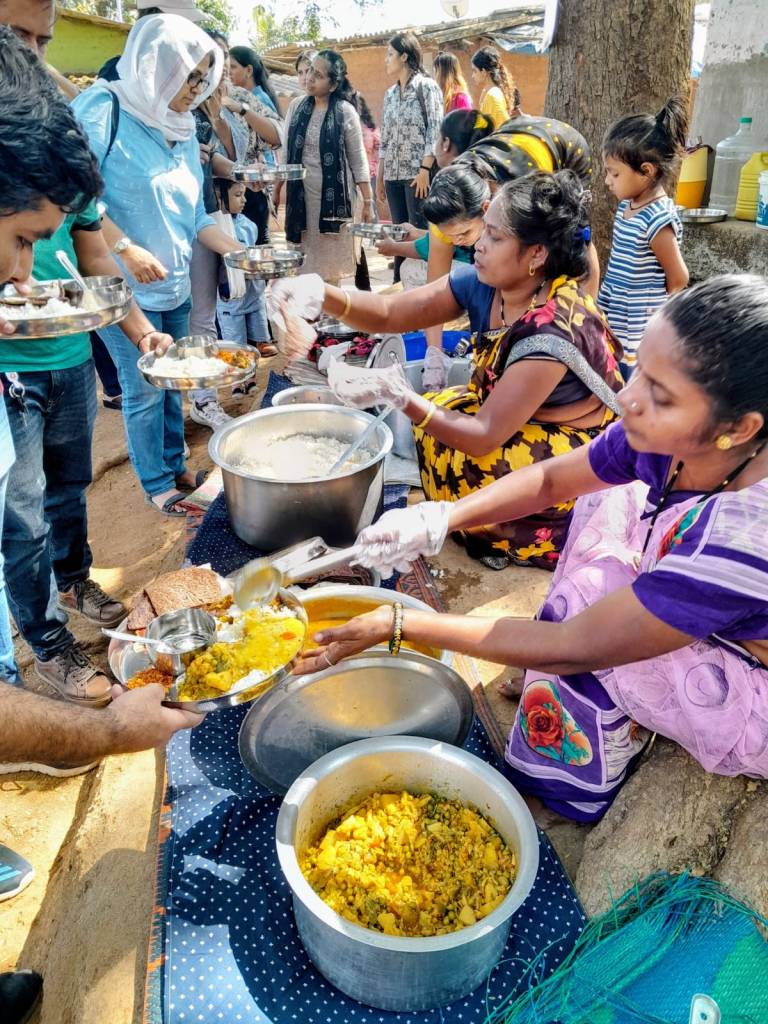
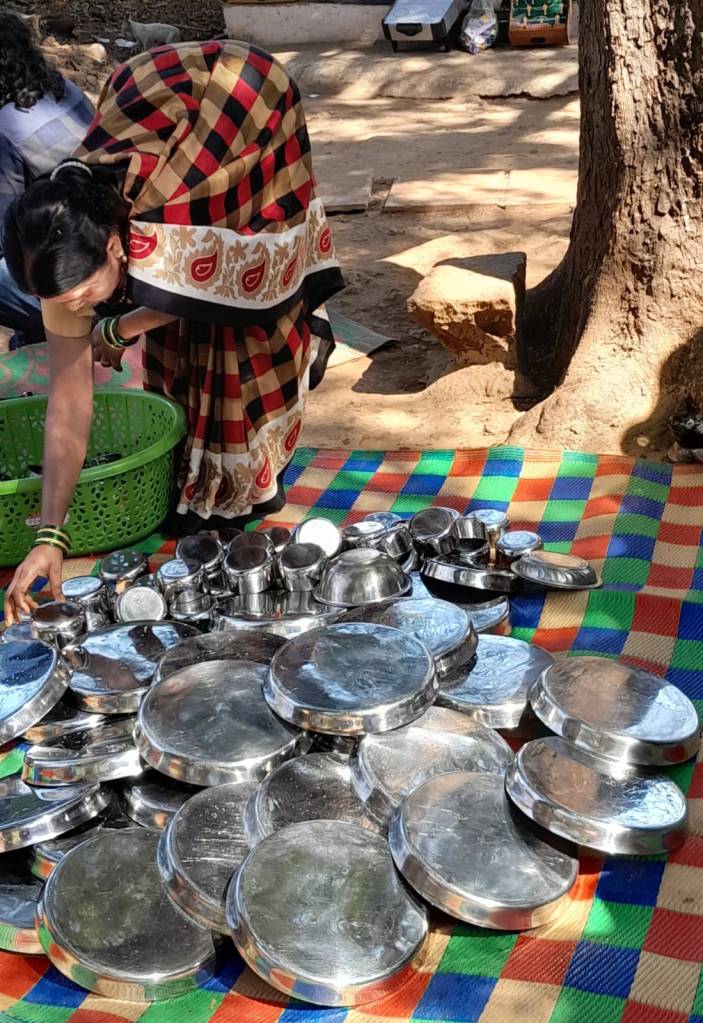
The flavorful smell of tribal masalas from the live kitchen was enticing us. The women were busy making ragi roti and rice roti over a clay stove using wood for the fire. We could see women making dal and vegetables in one corner. Our most awaited lunch began to be served. We were given new steel plates and steel bowls and spoons.
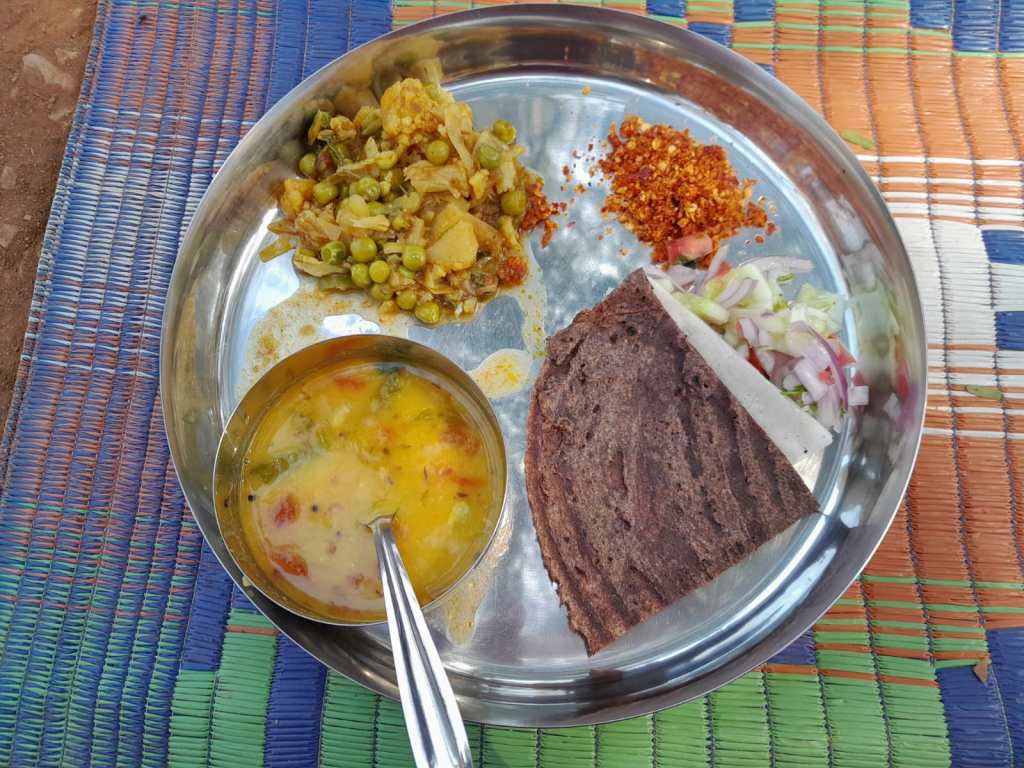
We were served Thetcha (chutney made with chilli, garlic, salt, peanuts), Salad, Bhareli vangi (Maharashtrian-style stuffed brinjal), Mixed vegetables, Rice roti, Ragi roti, Rice, and Dal for vegetarian guests and Chicken curry, Zavla (dried shrimp), and Fried bombils for non-vegetarian guests. The food was simple, delicious, and appetizing. Except for the chutney that was spicy, the rest of the items had a fresh and mildly fragrant taste. The mixed vegetables were cooked fresh and whole without gravy. The rice that was served was grown in tribal’s filed inside Aarey. One can take a good quantity of food without any guilt or fear of bloating.
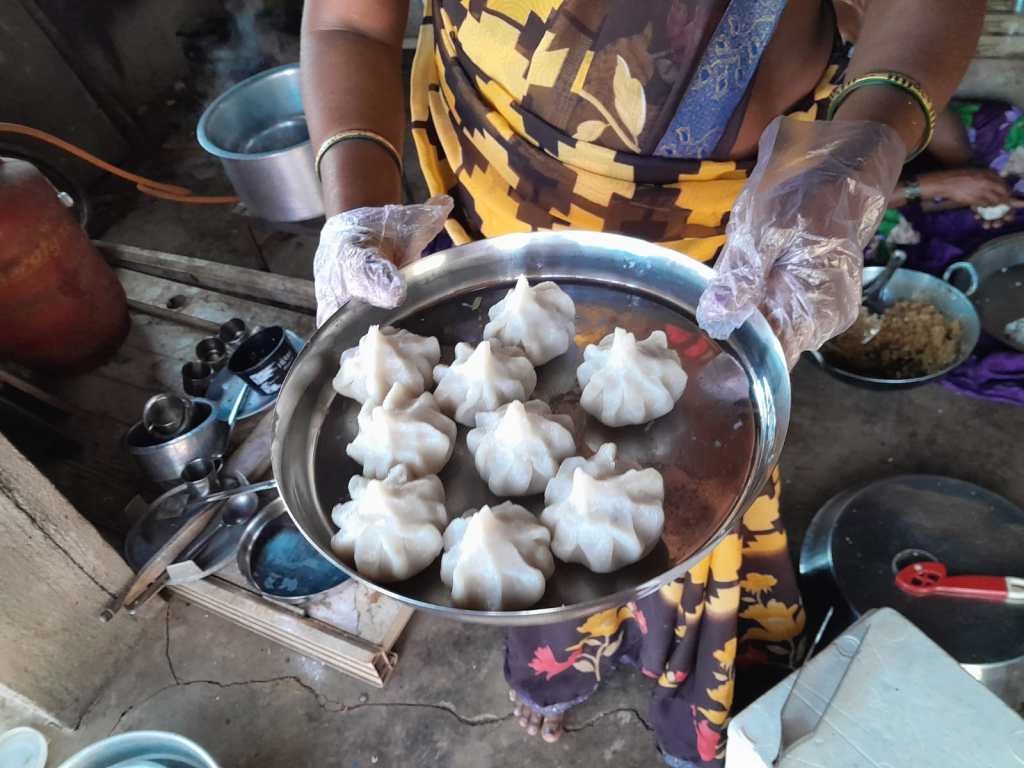
The icing on the cake was the Steamed modak that was served hot as a dessert. It finely balanced the sweetness of coconut with rice covering. The women graciously made a huge size of each modak for each of us.
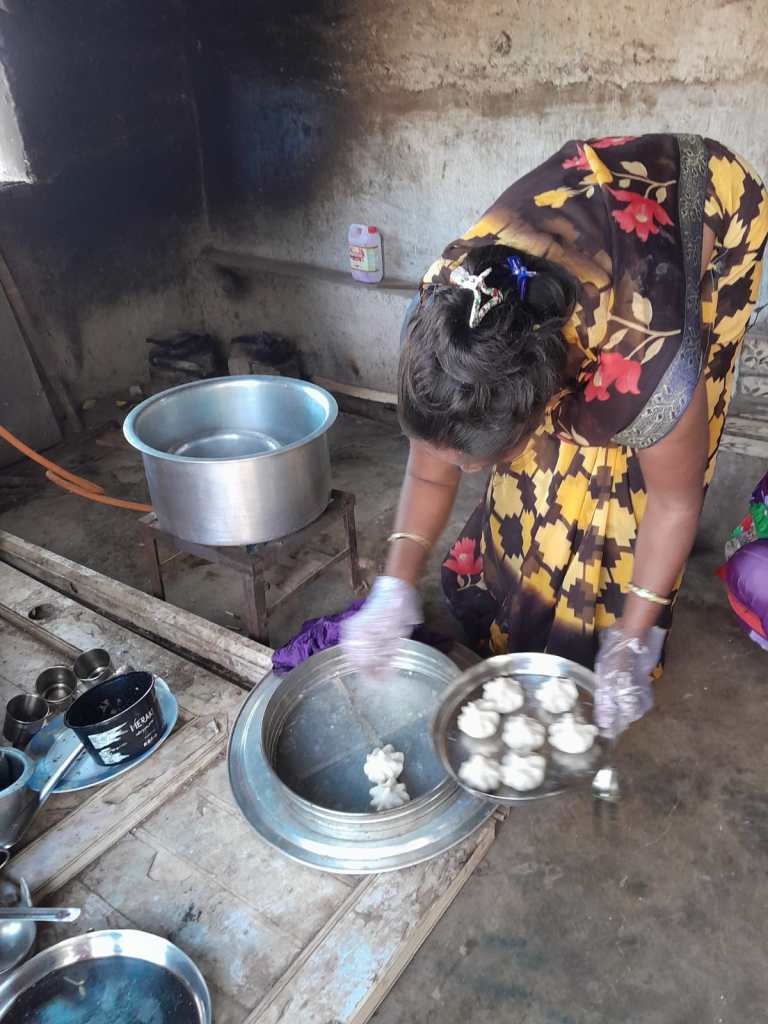

Mahesh and Cassandra (of Nazareth Foundation) announced that recently these women were invited to the Renaissance Powai where they celebrated Aarey culinary flavours. These talented cooks are being invited for catering orders. Their culinary skills have a good fan club online. One can place an order for the food online. The foundation has done capacity-building programmes for these women who now can manage the logistics of online orders all on their own.
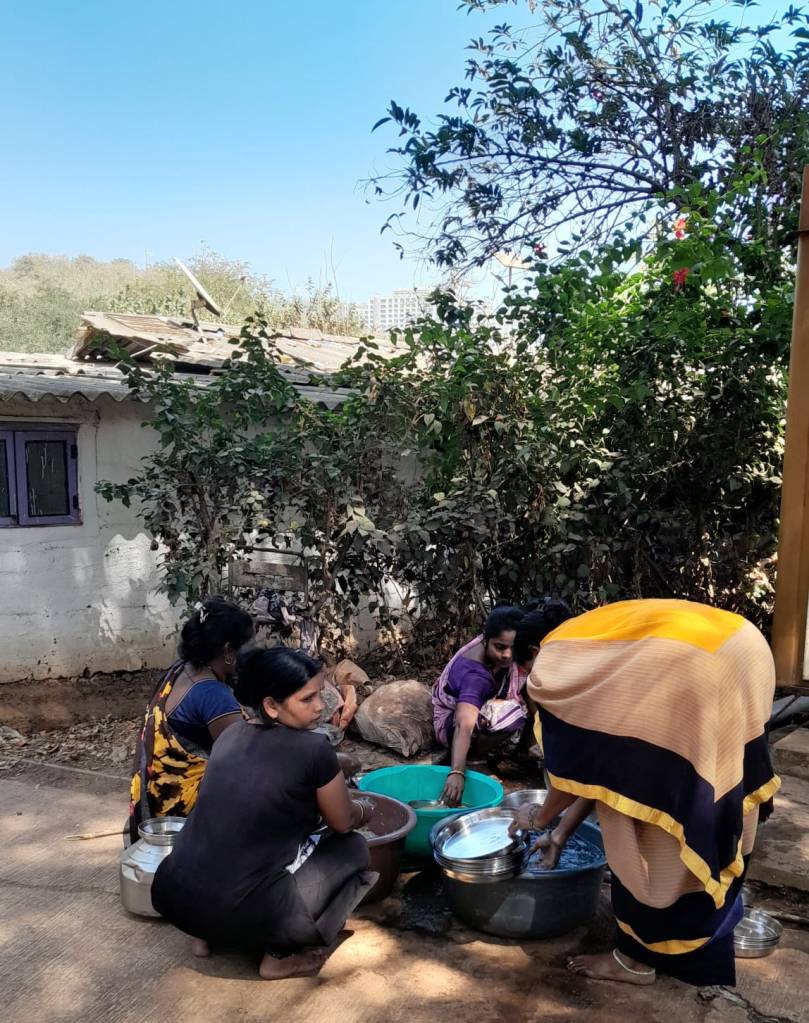
The spotlight of the tribal lunch for me was the use of stainless steel utensils and glass bottles instead of disposable cutlery which has become de rigueur for every event- big or small. The plastic bottles seamlessly fill up every event, their numbers often outwit those of the décor flowers at the event, and do not surprisingly disturb anyone. On the contrary, there was not a single item used during the tribal lunch that was going straight to the landfill. The women washed all the plates and bowls and dried them in the sun. The plates looked as spec and clean as those displayed in advertisements for dishwashing products. The average time for cleaning nearly 40-50 plates was less than 10 minutes as four to five women distributed the task among themselves. These women use eco-friendly soap solutions like the ash from chulla (wooden stove)for scrubbing. The adeptness and precision with which the women managed the entire tribal lunch ensure there are no unnecessary landfills as well as no harmful chemicals leeched out into our water and soil.
The women were shy and not very vocal but they enjoyed every bit of attention from us. Many of us wanted to take photographs with them, cook with them, and learn their techniques which they wholeheartedly obliged.
In times of burgeoning encroachments into the forests, it seems difficult to differentiate between slum dwellers and local tribals. But one conspicuous difference always exists between the two. The slum encroachments in forests are marked by garbage, filth, smell, and unhygienic conditions. They are mainly responsible for man-animal conflict with their unruly ways. On the contrary, a tribal area (pada in the local dialect) is always clean, culturally rich, and disciplined, and they live in harmony with leopards.
There are tribal development projects which aim to make tribals ‘civilised’ with modern education and amenities. Tribals are highly refined people who adopt a lifestyle that is in sync with nature. Whether it is their food, culture, art or festivals, they are deeply rooted in nature, making their living sustainable, harmonious, and most importantly happy.
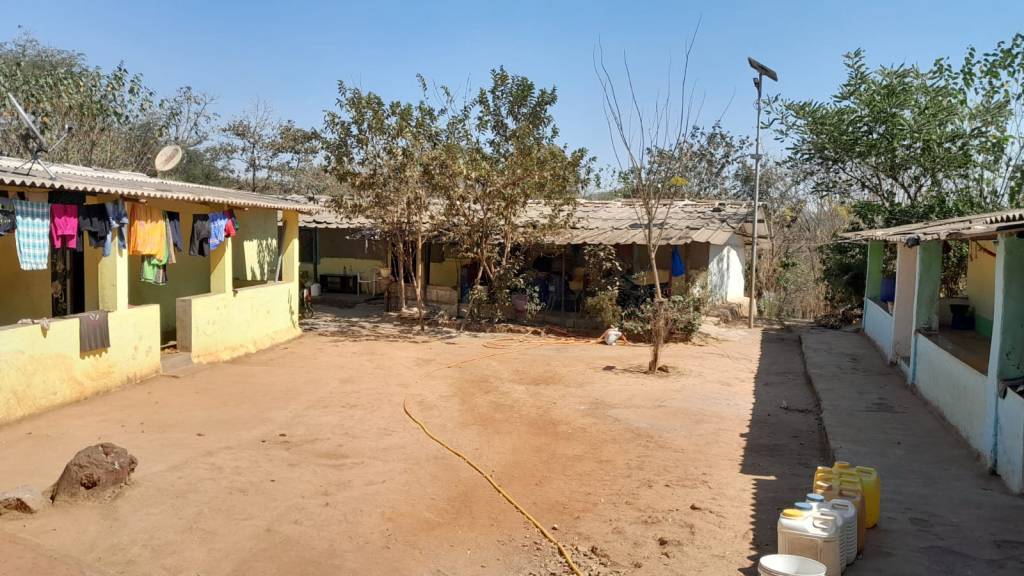
There is a certain paucity of funds which NGOs like the Nazareth Foundation are trying to bridge. The foundation with the help of corporate funding has facilitated a water tanker in the village. Earlier the village women filled the water from a well a few meters down their village. It was a painful task for these women to carry heavy buckets of water and climb the hill-like road daily. The water tanker has brought some relief to the community. There was another risky task for tribals- to use the washroom outside their houses at night. The foundation has built a bio-toilet which is easily accessible to all the houses. The capacity building of tribal women has made them confident to land government jobs besides providing catering services and managing online orders.
Tribal rehabilitation programmes should focus on harnessing the existing talents of the tribal community rather than masking them with modern vocations which are foreign to them. Tribal exchange programmes where tribals share their expertise and traditions can make them feel proud of themselves. Upskilling and capacity-building exercises can ensure an emancipated and confident survival.
The government must proliferate the tribal pockets left in the city which will aid in the conservation of biodiversity and the simultaneous creation of eco-sustainable spaces in the city. Huge infrastructure projects like building a Metro car shed in a forest destroy not only the environment with deforestation but also put an antiquated tribal culture on the verge of extinction by the virtue of usurping their lands, livelihood, and liberty.



Leave a comment